

Hung Liu was a Chinese American painter celebrated as one of the most important contemporary artists of California and the Chinese diaspora. Her paintings and gold leaf resin works evoked her personal history, memory, and identity often in relation to Maoist China and the Bay Area.
Liu was born in Changchun, China in 1948. Over the course of her career, she became one of the most important contemporary artists to emerge from California, known for her compassionate portrayals of ordinary people caught in the tides of history. Liu painted families in the countryside who were completing forced labor during China’s cultural revolution, prostitutes with dignity in elegant portraits, and eventually American farming families during the dust bowl crisis.
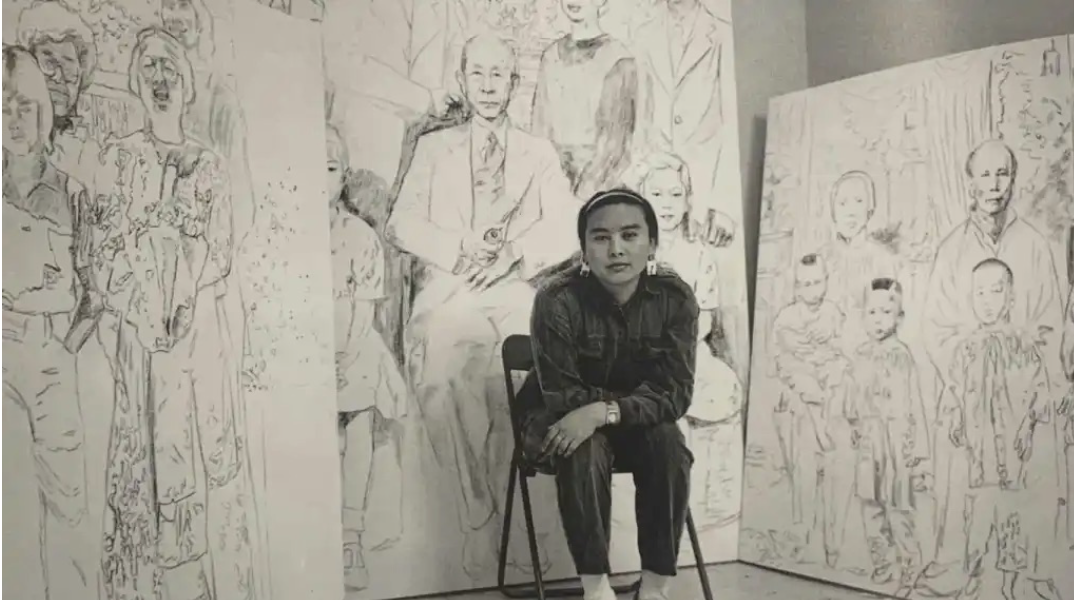
Hung Liu in her San Francisco studio in 1988
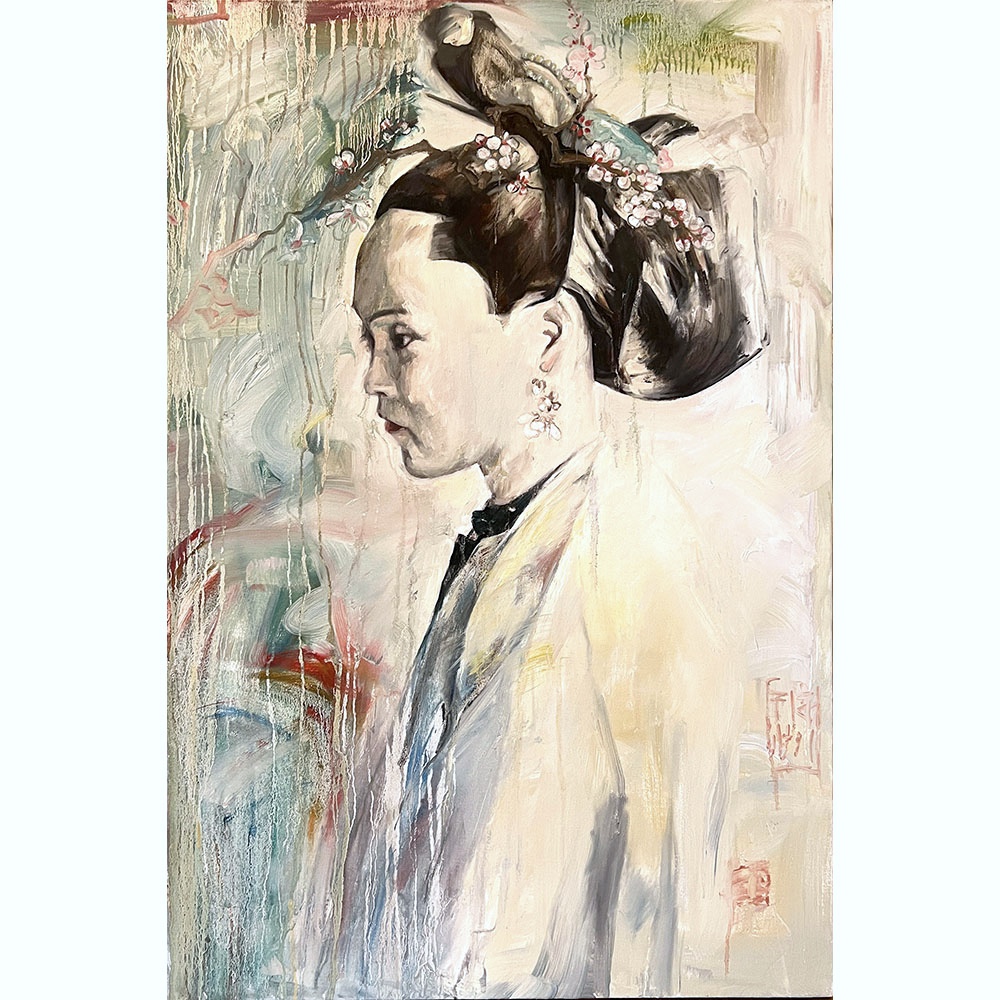
Liu’s early life in China was marked by the chaos of the cultural revolution: her father was captured and sent to a forced labor camp shortly after she was born, and Liu herself was sent to the countryside in 1968 for four years of hard labor. There she drew strength from the power of art. Liu secretly painted, drew, and photographed the village workers, seeing in them the human dignity that she wanted to share. Later, she turned her attention to the young girls who were sold into sex work by their impoverished families. These women had been commodified, their names replaced with the names of rare gemstones or beautiful flowers as their services were marketed to wealthy men. Like the countryside villagers she had rendered previously, she created beautiful places for these women to rest in perpetuity, on backgrounds of gold or silver, surrounded by flowers and other offerings.
In 1972 Liu was permitted to attend the Central Academy of Fine Arts in Beijing, one of China’s most prestigious art institutions, where she studied mural paintings in the style of Chinese socialist realism. Although there was little room for personal expression in this environment, Liu would insert her own personal symbols of hope (frequently lotuses and cranes) into paintings drawing from her studies of Buddhist iconography and ancient cave paintings. She would also frequently paint dandelions, a the flower name she gifted herself because of its constant migration and tenacious ability to grow roots anywhere.
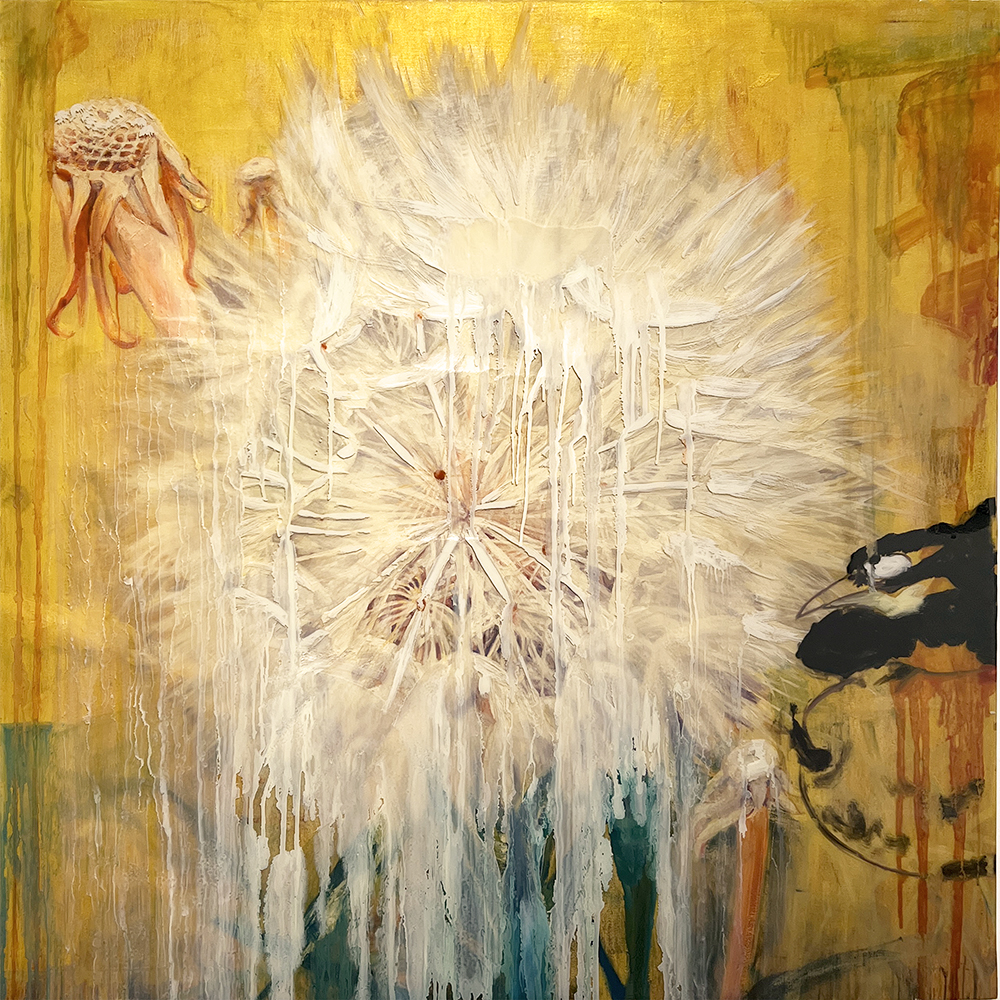
After a long legal process, Liu emigrated to the United States in 1984 to study at the University of California, San Diego. There she explored political and historical themes more freely, and developed her signature dripping, layered technique of painting and layering gold leaf within layers of resin. The dripping paint symbolized both the passage of time and the way memory blurs history. She frequently incorporated dripping circles, an allusion to the end of a chapter (in Chinese, a circle is used as a period in a sentence) as well as the infinite reincarnate cycle of life.

Throughout the next 20 years, Hung Liu gained international acclaim for her powerful reworking of photographic archives. Works such as Trauma (1989), Resident Alien (1988), and Daughter of China, Resident Alien (1988) explored her identity as both immigrant and woman. Her large-scale paintings, often combining realism with abstract washes of color, challenged the ways women and the working class had been depicted in both Eastern and Western traditions. Later in her career, Liu expanded her subjects to include the American experience, portraying Dust Bowl refugees and migrant workers in series such as American Exodus. Many of the dust bowl paintings were derived from the photographs of Dorothea Lange, linking their struggles with those of Chinese laborers.
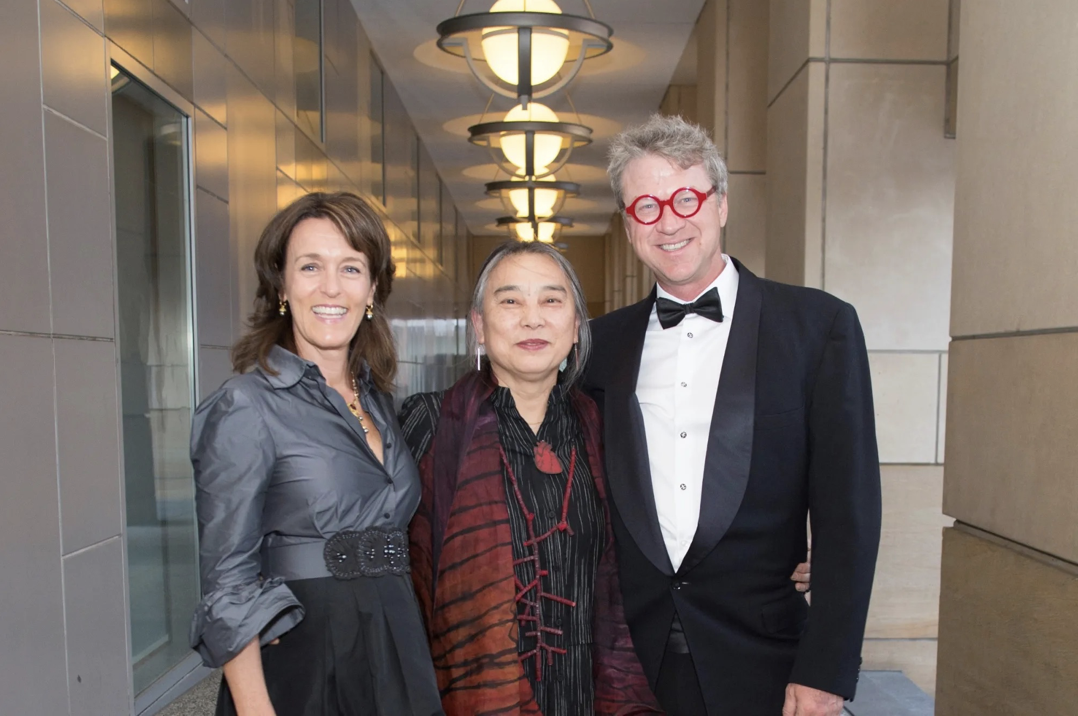
Tonya, Michael, and Hung Liu (source: Drew Altizer photography)
Liu’s work was acquired by many major collections, including the Smithsonian Institution, the San Francisco Museum of Modern Art, and the National Gallery of Art. The Smithsonian National Portrait Gallery organized Liu’s major retrospective, Hung Liu: Portraits of Promised Lands, in 2021—the first solo exhibition by an Asian American woman in the museum’s history. Hung Liu passed away from cancer that same year just before the show opened. Hung Liu was one of Tonya and Michael’s greatest friends and greatest artists they ever represented–her humor and approach to life and art forever impacted those who knew her. Through her art, she gave voice to the forgotten and the displaced, bringing attention and nobility to the history of working class and migrant people throughout the world.
Author: Sophie Carroll