
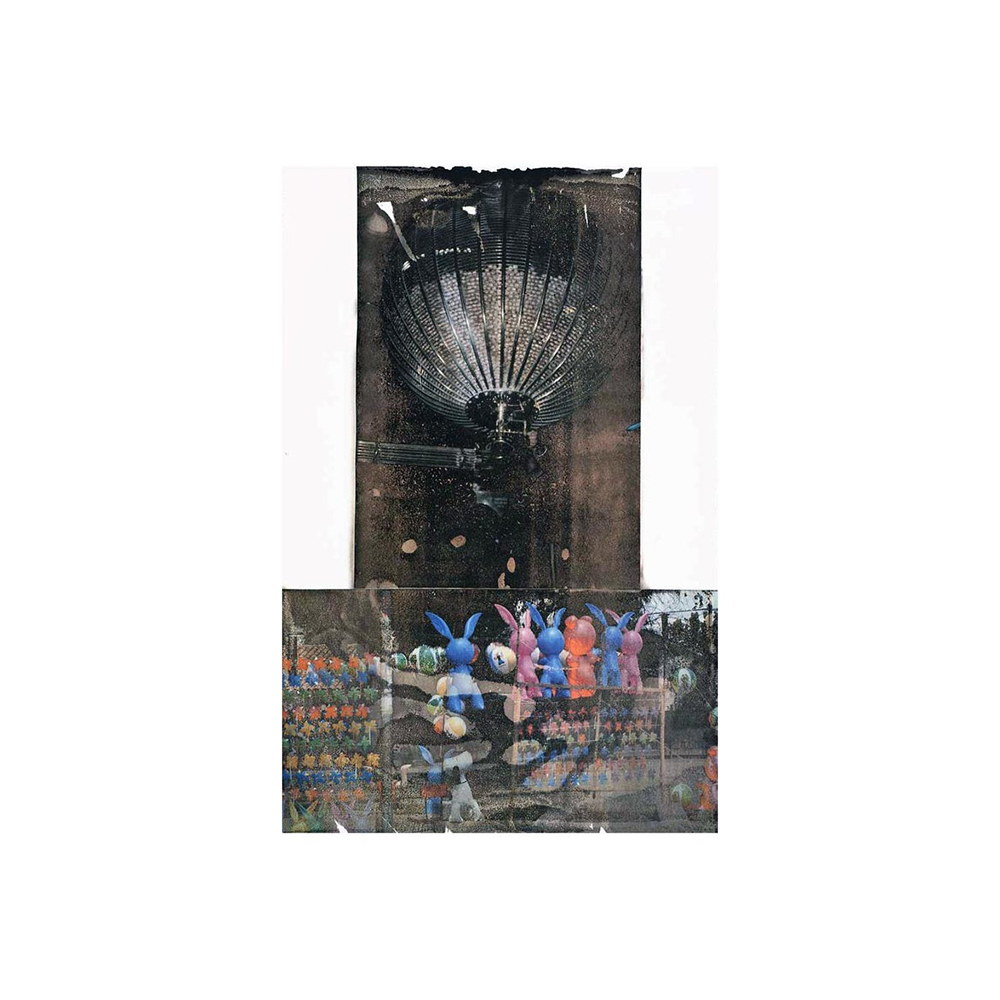
Robert Rauschenberg was an American artist whose experimentalism and creativity reshaped the landscape of 20th-century art. Rauschenberg blended Abstract Expressionism and Pop Art, as well as challenging the traditional distinctions between painting, sculpture, photography, and performance.
2025 marks the centennial of Rauschenberg’s birth, and the art world is celebrating his genius worldwide. The Guggenheim, Museum Ludwig, Menil Collection, Walker Art Center, M+ Museum (Hong Kong), and others are highlighting his works in their exhibitions.
Rauschenberg was born in 1925 in Texas, and grew up in a working-class family in a conservative area. After serving in the Navy during World War II, the GI Bill allowed him to attend college for free. Creative culture in the U.S. was expanding at the time, offering new career opportunities in advertising, graphic design, and more. Rauschenberg–along with others like Al Held and Cy Twombly–took advantage of the GI bill to atttend art school. Rauschenberg enrolled at the Kansas City Art Institute, the same school as Jack Lemon of Landfall Press would later attend.

After the Kansas City Art Institute, Rauschenberg attended the Black Mountain College in North Carolina. Black Mountain College was an incredible if short-lived educational experiment where fellow students and artists including John Cage, Merce Cunningham, Josef Albers, and Ruth Asawa enriched Rauschenberg’s trajectory. Rauschenberg frequently references his mentor Josef Albers, whose strict Bauhaus teachings Rauschenberg both respected and rebelled against.
In the early 1950s, Rauschenberg began producing works that blurred the boundaries between painting and sculpture. His “Combines” from the 1950s and 60s incorporated everyday objects like tires, quilts, newspapers, and stuffed animals, and they quickly became his signature innovation. Works such as Monogram (1955–59), featuring a taxidermied goat encircled by a tire, and Bed (1955), a paint-splattered quilt and pillow mounted vertically like a canvas, challenged what art could be. By integrating found materials and fragments of contemporary life, Rauschenberg asserted that art need not be separate from the world around it—it could absorb and reflect reality itself.

Rauschenberg was early to take interest in pop imagery and technology, and he started working with these topics before the Pop Art movement of the 1960s. Unlike other Pop Art artists such as Andy Warhol, however, Rauschenberg approached mass media and consumer culture with curiosity and optimism. He used silkscreen printing to layer images from newspapers, advertisements, and television into dense, visually dynamic compositions.
Throughout his career, collaboration remained central to Rauschenberg’s practice. He worked closely with choreographer Merce Cunningham, composer John Cage, and numerous performers, designing sets, costumes, and stage environments which combined art and movement. In the 1980s, the Rauschenberg Overseas Culture Interchange (ROCI) project took the artist around the world, where he created art inspired by local cultures and promoted the idea of cross-cultural dialogue.

Rauschenberg’s work earned him critical acclaim and numerous honors, including the incredible international honor of the Grand Prize at the 1964 Venice Biennale. Even late in life, he continued to experiment with digital technologies and new materials. At the heart of Rauschenberg’s work lies fearless experimentation, the belief of the interconnectedness of art and life, and a deep respect for innovation and collaboration. His works are included in many of the most major museum collections: Rauschenberg can be found in the Whitney, MoMA NY and SF, LACMA, Smithsonian, and Metropolitan museums, with works internationally at the Stedelijk Museum (Amsterdam), Palais des Beaux-Arts (Brussels), Centre Pompidou (Paris), and more.

Author: Sophie Carroll