In October 2025, Tonya Turner Carroll was asked to speak at the Morehead Cain alumni forum at the University of North Carolina Chapel Hill. Her topic was the weaponization of female imagery, from the exclusion of Camille Claudel’s narrative in the National Gallery of Art to Turner Carroll’s research in the association of women and sin in christian art.
Transcript:
In 2022, I reported a crime to the security guard at the National Gallery of Art. There were 19 sculptures by Rodin on display in the European sculpture galleries, but not One. Single. Sculpture. by the woman who had created many of the greatest parts of his sculptures as well as magnificent ones of her own: Camille Claudel. I asked him to take me to talk with the curator.
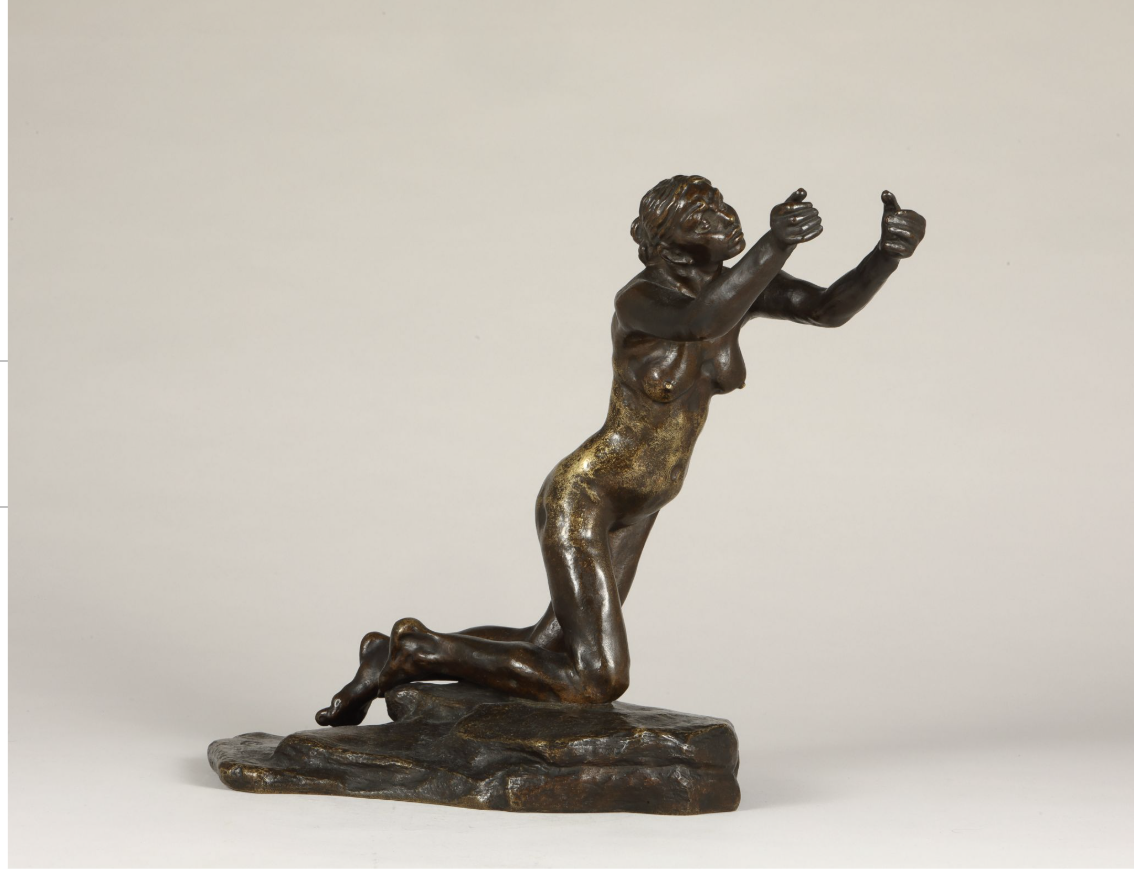
I described the most significant autobiographical Claudel sculpture–L’Implorante–that had been entrusted to me by the Claudel family to place. The sculpture portrays Claudel pregnant, on her knees, reaching toward Rodin with outstretched arms, begging him to marry her. He didn’t, so Claudel’s mortified family had her locked away in an asylum for the remaining 30 years of her life. It was agonizing for me to see that even 100 years after she lived, Rodin’s genius was on full display, while Claudel’s was not even present in the flagship museum of the U.S.
I was disheartened when the curator told me Claudel was, in fact, at the top of their acquisition priority list, but acquisition funds had already been committed for that year. I was feeling pressure from Claudel’s family to place the sculpture quickly, because they intended to use the proceeds to make a film about the Amazon River. So, I invited curators from the Art Institute of Chicago and the J. Paul Getty Museum to visit the sculpture in our gallery in Santa Fe. The curators were planning Claudel’s first major U.S. museum tour, and asked to highlight it in their exhibitions and accompanying book. By the time the exhibit opened at the Getty, I had sold it to a private collector and went to visit it one last time before once again, he would hide her from public view.
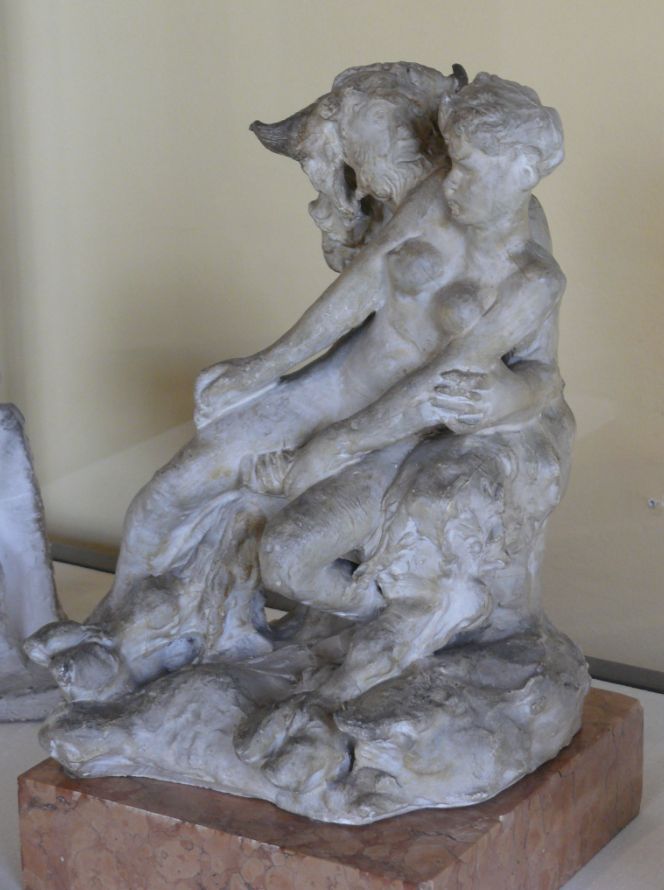
We are witnessing a revolt against nature: a woman genius. Read the Getty’s wall text by a 19th Century male art critic. Obviously, that critic didn’t really know his art history. Because from the earliest visual information we have, women have been revered for precisely their connection with nature’s cycles and their ability to create new life. I wanted to set that straight in the art historical record and share the correct information with the world.
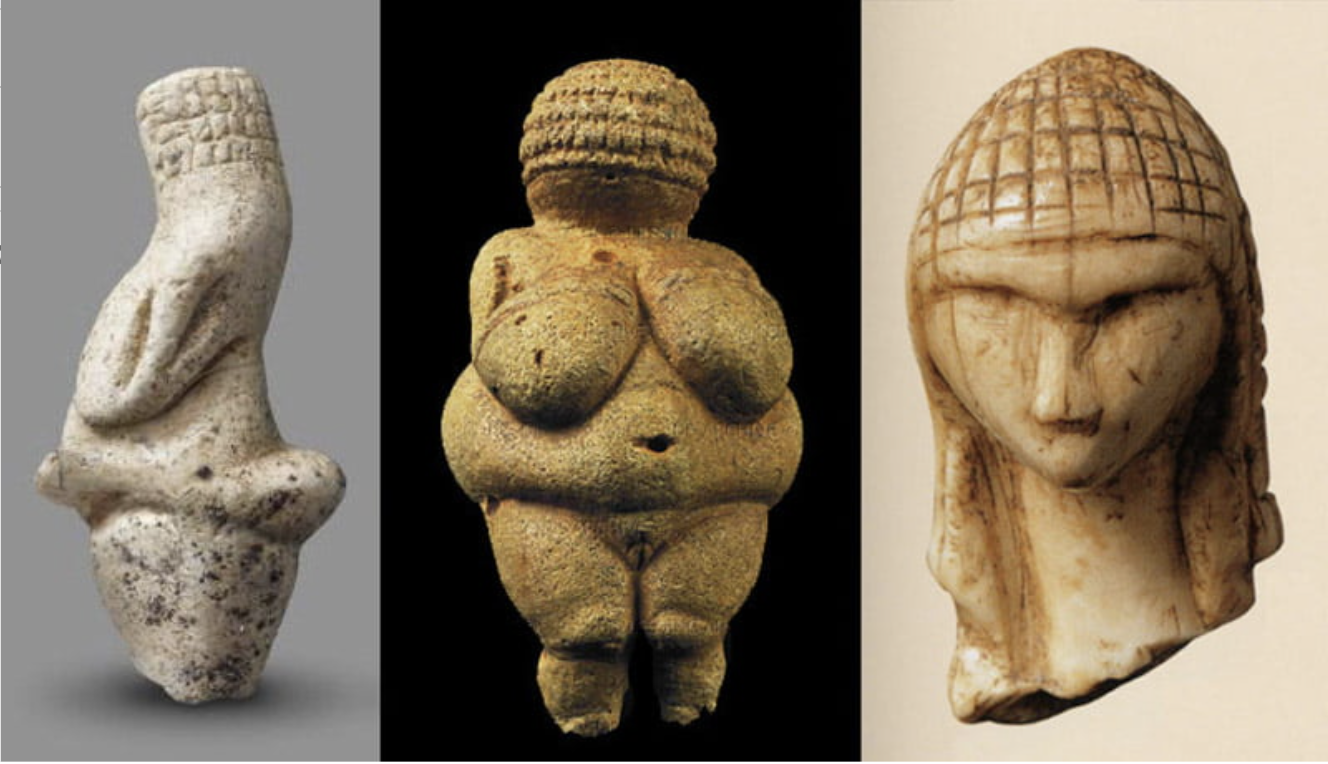
I began research that took me to a cave temple in the very tip of the heel of Italy, where a ritual burial from 26,000 BC contained the earliest datable female pregnant remains. The cave is now called The Cave of the Mother, due to all the other female ritual burials, votive sculptures, and wall paintings found inside. Many of the burials and votives contained a type of Paleolithic “crown” made from hundreds of shells, deer canines, and ochre pigment. Some archaeologists believe that the Paleolithic linear graffiti found inside was an early form of counting, developed by women to track their monthly cycles and pregnancies. After the Paleolithic, female genius continued to be venerated there through the goddess Demeter (De Mater), and all the way up to the 16th Century, when Christians venerated Mary there. All we had before writing was visual imagery. And the visuals show us that woman’s creative genius was venerated as nature herself, certainly not a revolt against it.
I felt like I was literally descending into the womb of the earth when I entered that cave, and the term Mother Earth made perfect sense. I wanted to figure out where the visuals changed and began to tell a different story about women and their genius. I knew that by the Bronze Age, female deities like Inanna, Aphrodite, and Ishtar still carried the Queen of Heaven title, but they were often depicted with a male consort, who was described as a gardener, responsible for ensuring abundance by plowing and watering her field. Early Abrahamic religious scholars and visual art have depicted Eve and Adam in this way. The earliest Christian art, at Dura Europa in Syria, depicts Adam and Eve as bearing equal responsibility for their expulsion from Eden.
I found another cave temple in an area that was settled in 400 BC and visited it with the curator of the archeology museum in Ugento. That’s where I found my first blatant visual shift from female veneration to male veneration. The temple originally had an altar placed under the image of a female wall painting, but it was clear from the markings on the cave floor that the altar had literally been moved under a much later 17th century painting of the Crucifixion. OK, so now woman had a secondary visual role, but it still wasn’t sinister. What happened next?
I continued on to a 13th century art site in the southern tip of Italy, the 13th century Basilica di Santa Caterina d’Alessandria, in Galatina, where I was literally dumbfounded by the glorious floor to ceiling frescoes that covered almost every square inch of the basilica. I realized that these gold leaf and lapis lazuli pigmented paintings were completely different from anything the local population would have ever seen before, and was sure to fascinate them. Especially since they would have been largely illiterate at the time, and obtained their knowledge from visual observation.
Then, I found what I had been searching for: the earliest painting I’ve seen of the serpent in the garden of Eden depicted as a woman: with a distinctly female face and long blonde hair! This visual manipulation of religious syncretism made woman suddenly the untrustworthy culprit in the fall of humankind.
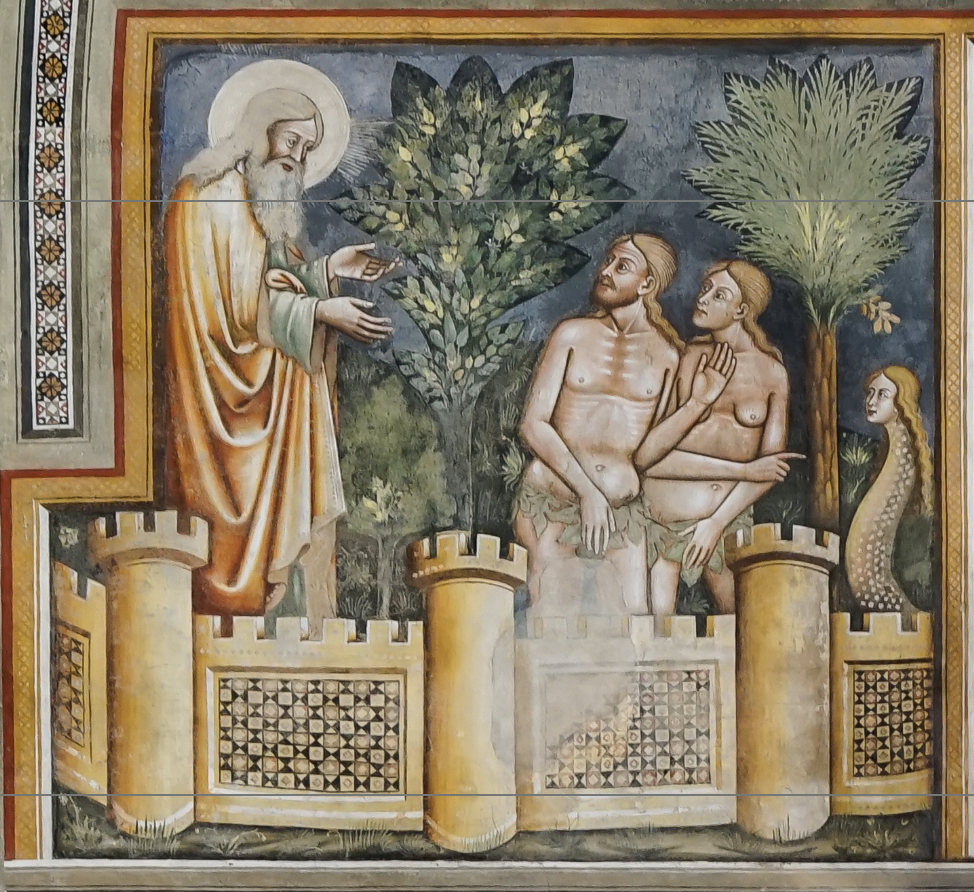
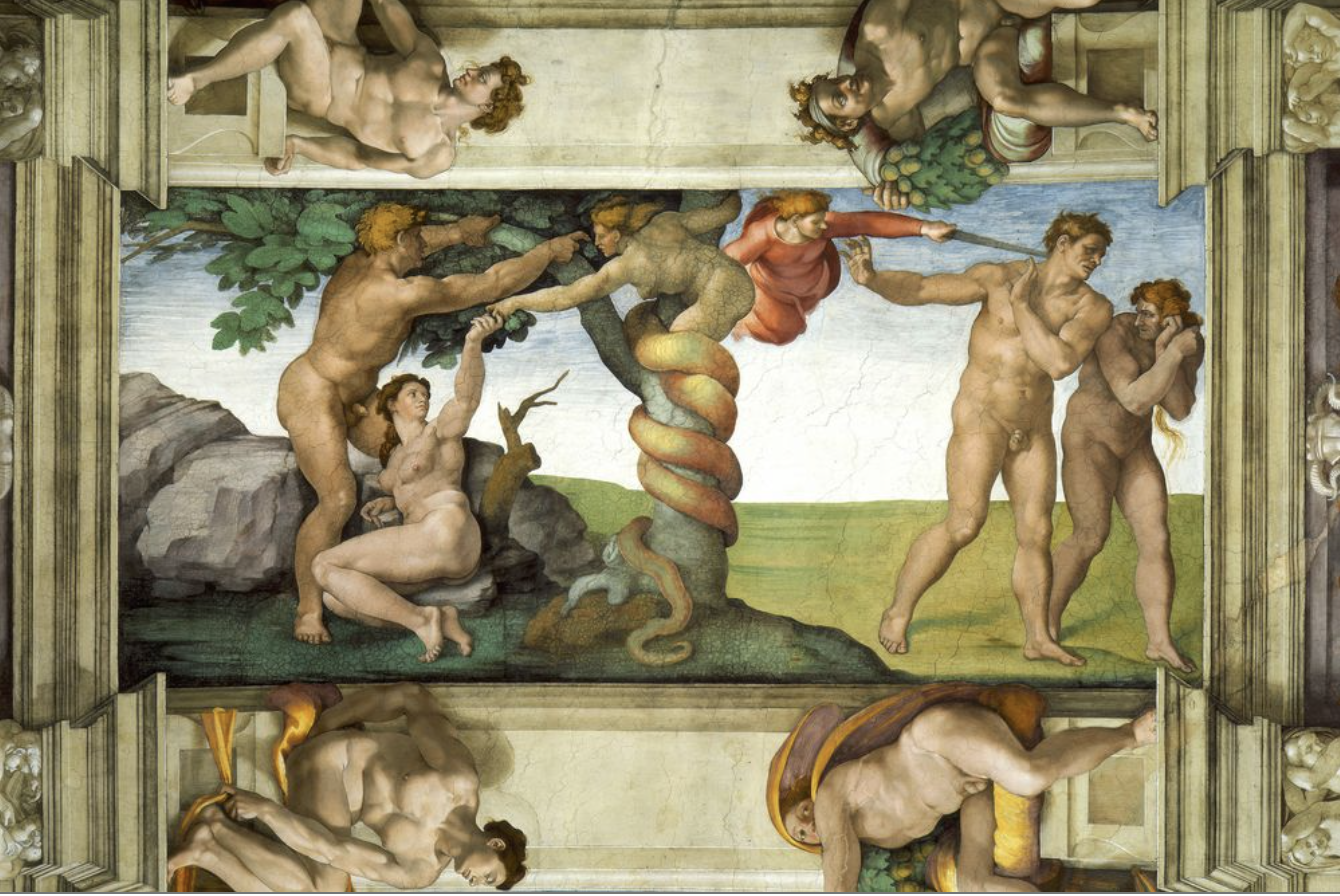
This type of depiction stems from a 12th century theologian, Petr Comens, who wrote that the snake must have been female, because only another woman could have persuaded Eve to eat the fruit. Artists latched on to this iconography; unfortunately even Michelangelo fell for it, painting the snake in his Sistine ceiling as a female. AMAZING the consequences this visual shift has hurled upon women! Burning women as witches at the stake, locking them in mental institutions against their will, denying them basic rights such as voting and making choices about their own bodies, domestic violence, human trafficking. These are but a few of the ramifications of the denigration of women in visual art.
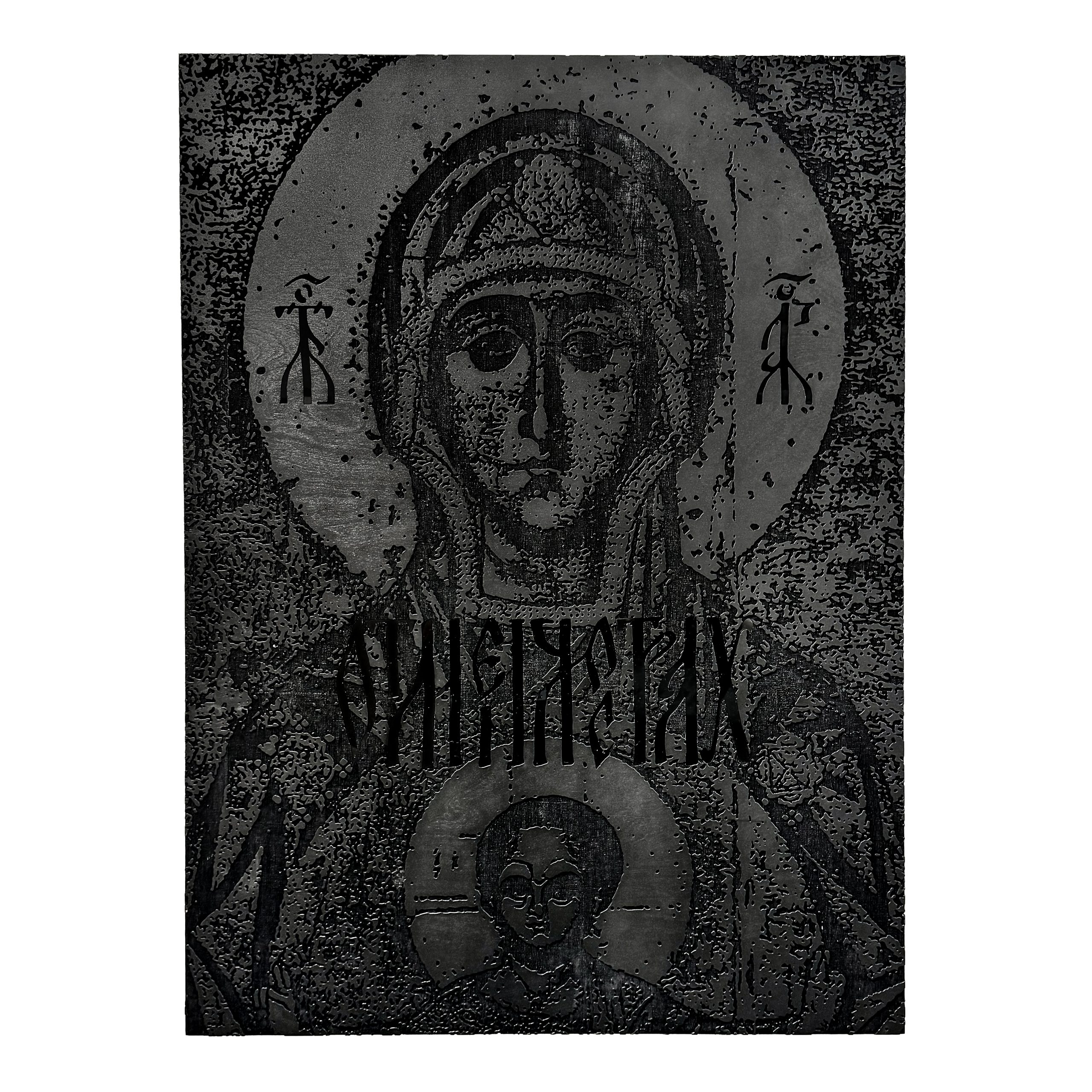
I follow two guiding principles in my life and my curatorial practice. I seek to transform the knowledge I accumulate into wisdom that can positively impact society. I act upon that wisdom, because my action is my only true possession, it is the ground upon which I stand. So I’m going to continue researching imagery of and by incredible women, correcting the art historical record when appropriate. But it’s an uphill battle to change the visual narrative, because women and their images continue to be locked up, just as artists I represent like Camille Claudel and Russian activist artist Nadya Tolokonnikova, who was locked away in a Siberian penal colony for two years for creating what was later dubbed one of the most important artworks of the 21st century.
I challenge you, fellow scholars to question the visual imagery you digest. Don’t believe the old cliche “Seeing is Believing.” Instead, develop your visually fluency so you can decide for yourself the truth of what you see.