
John Barker and the art of distractionism
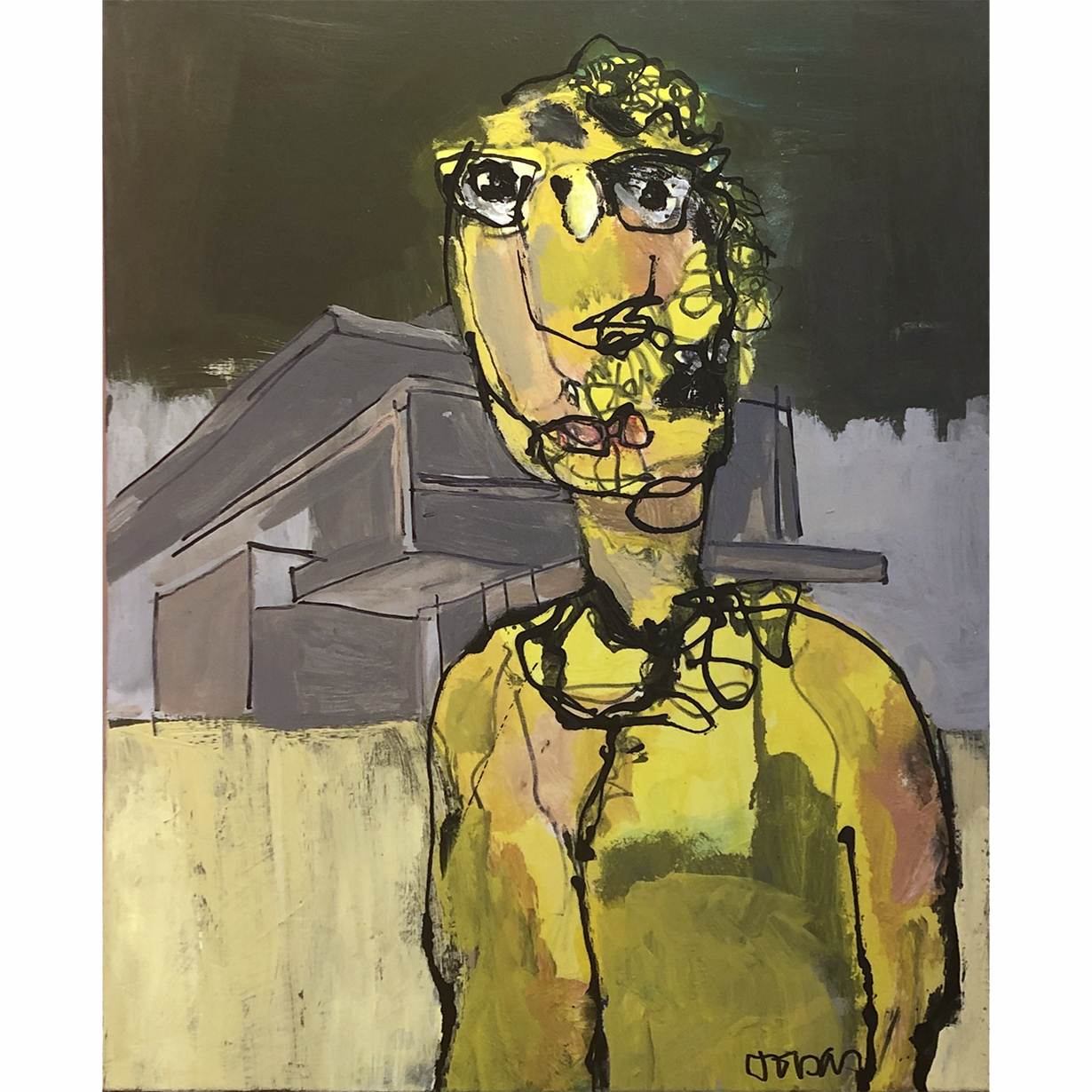
John Barker is “distractionist.” His energetic, emotionally charged paintings capture the restless, often chaotic energy of his canvases: colors clash, forms blur, and figures emerge in a swirl of lines and paint drips.
Barker, a native Santa Fean, took his first art class in the basement of The New Mexico Museum of Fine Arts when he was 12. He immediately realized all of the other students were more interesting than the still life he was supposed to draw. He drew scribbled, flying figures, and eventually the teacher put him in charge of watching a woman named Rosemary who liked to eat the paint–the energy Barker brings to art spaces leads him into anomaly and adventure.
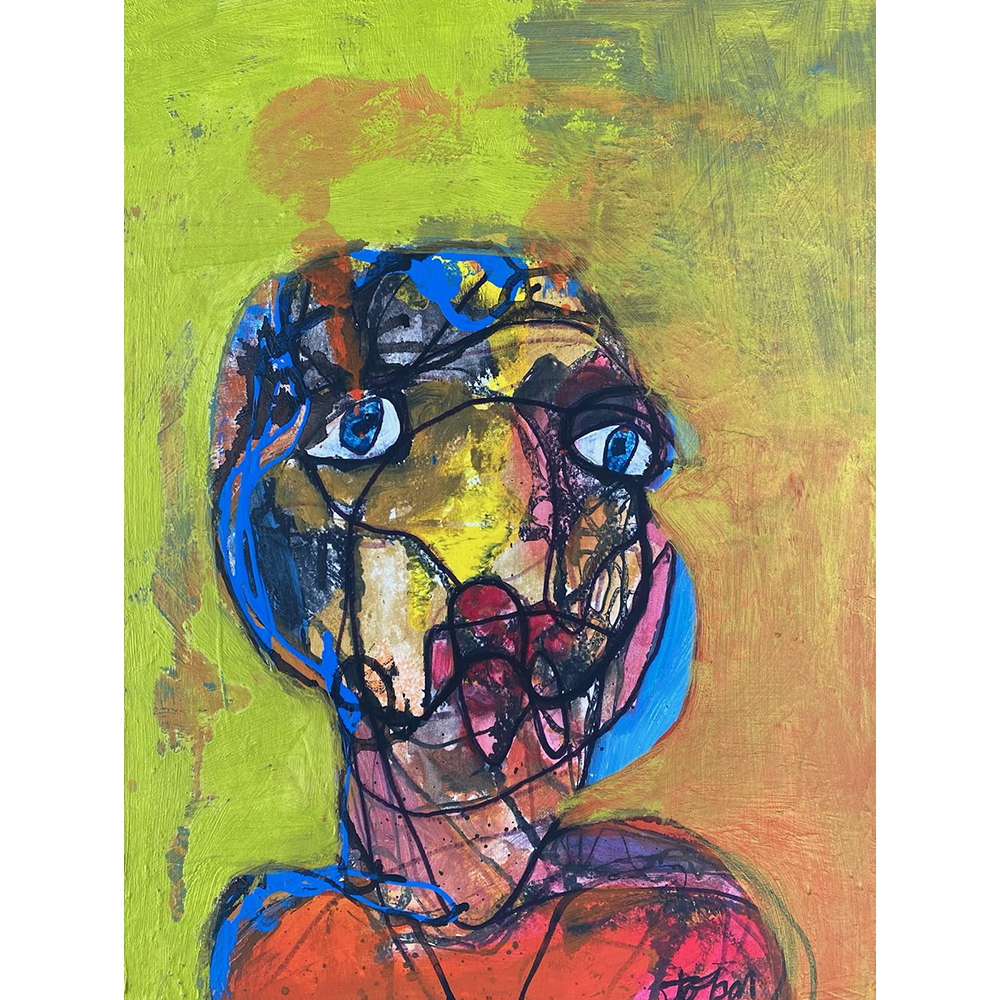
John Barker’s subjects tend to be people he knows — friends, acquaintances, local residents — but rendered as distorted, sometimes exaggerated figures whose bodies and faces are transformed by gestural, urgent markings. Rather than polished portraiture, Barker’s bodies flicker with psychological intensity: their distorted features and restless compositions evoke a sense of inner disquiet or emotional turbulence, while remaining accessible and often charged with humanity.

Another iconic set of Swoon’s work are her eidophones. Eidophones use the artists most iconic imagery in harmony with three dimensional found objects that have a deeper significance–for example, found material from the 2024 floods in Thailand, pieces of past installations, or doors or other household items from social activism centers where Swoon has worked. The inspiration for the imagery comes from the artist’s experience of her mother’s passing: when Swoon’s mother died, she experienced visual and auditory sensations emanating from the deep connection of “shared death” which she visually translates in her eidophones. Swoon explains the history of her eidophones in this video by the Taubman Museum.
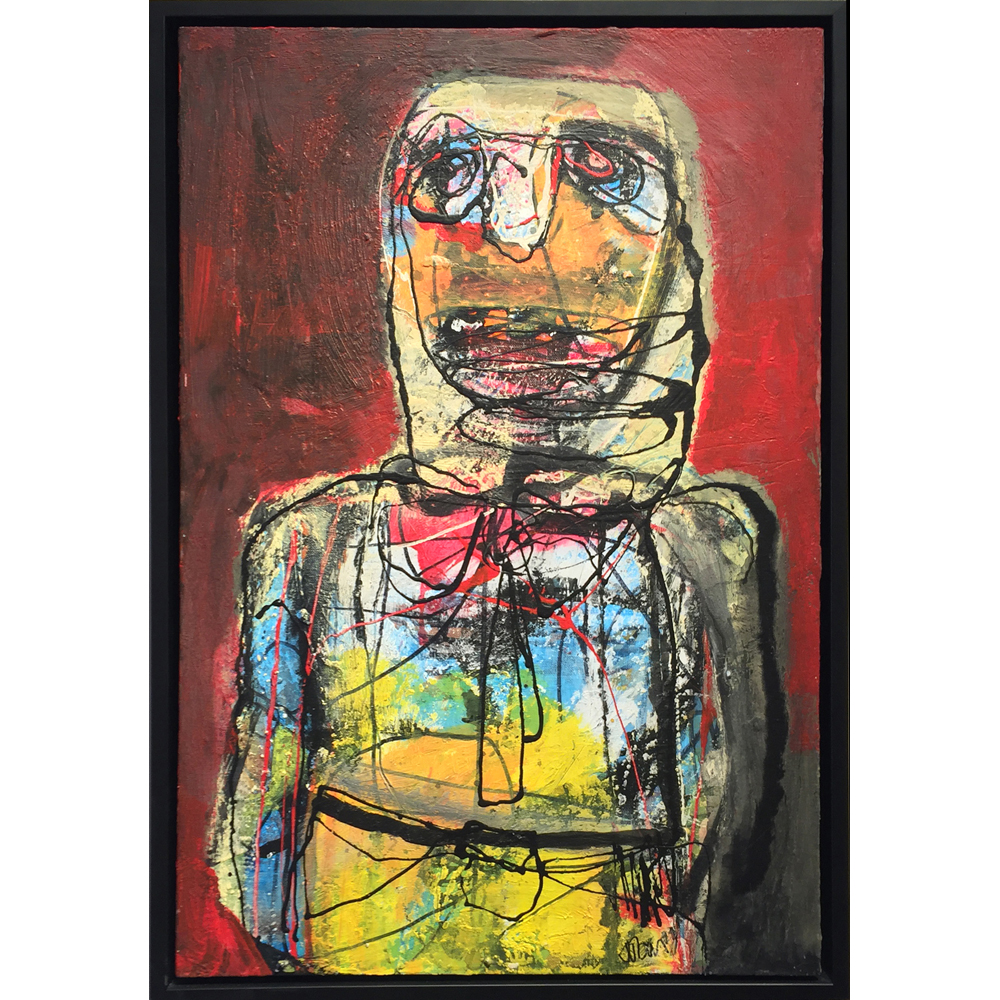
In his own words, many modern lives — overloaded with stimuli, fragmented attention, constant movement — demand a new visual language. “Distractionism” is Barker’s attempt to reflect that: in a 2016 feature in Santa Fean magazine, he states that “[much of] today’s art is from the head, but my paintings are from the heart.”
After attending the University of New Mexico, Barker spent 20 years in New York before returning to the land of enchantment. During that time, he was an artist assistant to greats such as Rudi Stern, Paul Jenkins, and Larry Poons, and worked in the art departments of Walt Disney and Discover Magazine.
John Barker has exhibited at Turner Carroll Gallery, the Eggman & Walrus Art Emporium, and more. His approach is deeply contemporary — reflecting the disjointed pace and visual overload of modern life, while still anchored in human connection and the chaotic reality of the everyday.
Author: Sophie Carroll